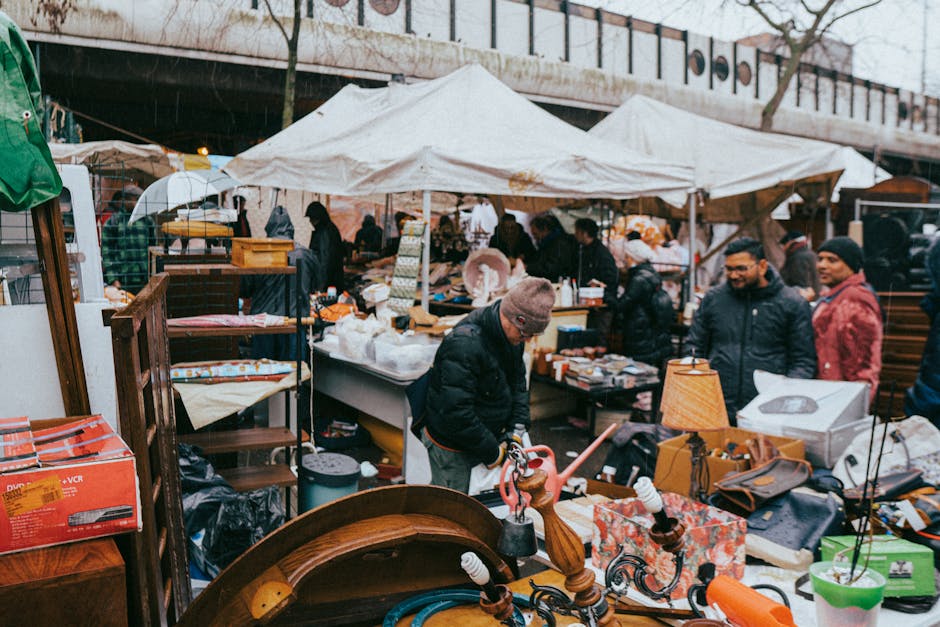
Walthamstow Market Rubbish Removal Guide for Stallholders
If you run a stall at Walthamstow Market, you already know the job is about far more than selling. You unpack before the day gets busy, keep the display looking sharp, and then somehow deal with boxes, wrap, broken packaging, food waste, old stock, and the odd thing that never quite fits back into the van. This Walthamstow Market Rubbish Removal Guide for Stallholders is here to make that end-of-day mess feel manageable. It brings together the practical steps, common mistakes, and sensible disposal options that help stallholders stay tidy, save time, and avoid unnecessary headaches.
Truth be told, waste builds up fast on a market pitch. One minute your table looks spotless; the next it is surrounded by cardboard, cling film, damaged crates, and bags you do not want dragging through the street. The good news? With a simple routine and the right removal plan, it becomes much easier to stay in control.
Why Walthamstow Market Rubbish Removal Matters
Market rubbish is not just a cosmetic issue. For stallholders, it affects trading speed, safety, customer experience, and sometimes even access. A cluttered pitch can slow you down when you are setting up at 7 a.m., and it can create a scramble at closing time when you are tired, the weather has turned, and everyone wants to get home. The smaller the stall, the more every inch counts.
There is also the public side of it. Walthamstow Market is a busy, high-footfall environment. Customers notice everything: a neat table, a clean floor space, and yes, the pile of flattened boxes waiting behind the stand. Nobody wants their stall to be the one that looks forgotten after the rush. And nobody wants waste creeping into neighbouring trading space either.
Waste management matters because market trading is fast-moving. You may be handling perishable stock, fragile goods, packaging, display materials, or bulky items that need to go somewhere quickly. If you leave disposal decisions until the end of the day, it is easy for rubbish to stack up and create a second job you never really planned for.
Practical takeaway: the best rubbish removal setup is the one that fits your stall rhythm, not the other way around. If it takes too long, it will get skipped. If it is too vague, it will get messy. Simple usually wins.
In our experience, stallholders who treat waste as part of the trading process, rather than an afterthought, tend to finish the day calmer. A small difference, but a real one.
How Walthamstow Market Rubbish Removal Guide for Stallholders Works
At a practical level, market rubbish removal is about sorting, storing, and collecting waste in a way that matches the pace of trade. You are usually dealing with a few different streams: general waste, cardboard, plastic wrap, food waste, damaged stock, and occasional awkward items like broken display boards or unsellable containers.
The first decision is whether the waste can be compacted, separated, and taken away in small loads, or whether it needs a more structured removal service. A stall that sells clothing will produce very different waste from one selling produce, cooked food, or homeware. That matters. It changes the volume, the type of waste, and the urgency.
Many stallholders use a hybrid approach. They keep a tidy on-stall sorting system during trading hours and then arrange a larger collection for bulkier waste, end-of-season clear-outs, or items that cannot be left in a general bin. If you need a broader commercial solution, it can help to look at business waste removal support alongside one-off waste clearance.
For bulkier items, a dedicated collection can save a lot of carrying around. It is especially useful when packaging builds up after stock deliveries or when old display materials need replacing. If you are dealing with furniture-style fixtures, shelving, or worn equipment, services such as furniture disposal or furniture clearance may be more appropriate than trying to piece things out bit by bit.
The key is to match the removal method to the type of waste. That sounds obvious, but it is where many stalls get caught out. A bit of cardboard is easy. A wet, mixed pile of packaging and food residue is not. And yes, the smell tells you that quickly enough.
Key Benefits and Practical Advantages
Good rubbish removal does more than keep a stall tidy. It changes the whole trading day. You move faster. You can close down with less stress. Customers see a more professional setup. And your pitch is less likely to become a magnet for stray packaging or blown-about debris. On a breezy London day, that last one matters more than people think.
- Cleaner presentation: a clear trading space looks more organised and trustworthy.
- Better safety: less clutter means fewer trip hazards for staff and customers.
- Faster pack-down: waste has already been sorted, so closing time is smoother.
- Less storage pressure: you are not hiding waste behind stock or in the van for days.
- More room for trading: every bag and box removed gives you back valuable space.
- Lower stress: no one wants to finish a long market day wrestling with rubbish.
There is another benefit people often overlook: waste discipline supports stock discipline. Once you get in the habit of separating sellable goods, damaged goods, and throwaway material, you tend to catch problems sooner. That can reduce accidental stock loss. Small win, but it adds up.
If your stall produces mixed rubbish regularly, a more general waste removal arrangement can be a useful backstop. For traders who also store stock at home or in a back room, services like home clearance or office clearance can sometimes help when the rubbish problem has spilled beyond the stall itself.
Who This Is For and When It Makes Sense
This guide is for stallholders who want a practical, no-nonsense way to manage rubbish in and around Walthamstow Market. That includes long-term traders, occasional traders, pop-up sellers, food vendors, clothes stalls, gift sellers, crafts traders, and anyone who sets up and breaks down regularly.
It also makes sense if you are dealing with a one-off situation. Maybe you have changed your stock display, replaced fixtures, or cleared out worn equipment after a busy season. Maybe a delivery went wrong and left you with more packaging than you expected. Or maybe you are preparing for a market restart after a quiet spell and want to clear the dead weight first.
Some traders only need simple bin discipline. Others need a more thorough collection because their waste is bulky, frequent, or awkward. If your rubbish includes broken appliances, for example, then a specialist service such as fridge and appliance removal may be needed. If you ever handle sharp, contaminated, or otherwise risky material, check whether hazardous waste disposal is the right route instead of standard rubbish removal.
So, who really needs a proper plan? Anyone who has ever thought, "I'll deal with it later." Later is where clutter starts winning.
Step-by-Step Guidance
If you want a simple system that actually works, follow this order. It keeps things practical and avoids the usual end-of-day scramble.
- Map your waste by type. Look at what you generate on a normal trading day: cardboard, wrappers, produce waste, damaged stock, broken packaging, and any bulky items.
- Decide what stays on-stall and what leaves immediately. Some light waste can go into a small collection bag. Bulkier items should be boxed or bagged separately so they do not become a mess.
- Use labelled containers. Keep a clear system for recyclable materials, general waste, and anything that needs special handling.
- Flatten and compress where safe. Cardboard boxes take up far less room once flattened. That one habit alone can transform your pack-down.
- Set a closing-time routine. Waste should be dealt with in the same order every day. The routine becomes automatic after a while.
- Book the right removal method. For regular commercial waste, a commercial waste removal service is often the most straightforward option. For a bulk clear-out, use the relevant clearance service instead.
- Check access and timing. Make sure collection can happen without blocking neighbouring stalls, market walkways, or loading access.
- Review what went wrong. If rubbish keeps overflowing, the problem is probably volume, timing, or poor separation. Fix the system, not just the symptom.
A small example: a stallholder selling handmade home goods may collect a surprising amount of bubble wrap, sleeve packaging, broken boxes, and display offcuts in one busy week. If those items are flattened and separated daily, they are easy to manage. If not, they become a lumpy, awkward heap that always seems to appear at the worst moment. Usually when you are already late. Of course.
Expert Tips for Better Results
The biggest improvement usually comes from treating waste like inventory: something to control, not something to hope disappears. That shift is subtle, but powerful.
- Keep one sealed bag for mixed rubbish only. It prevents small amounts of waste from spreading everywhere.
- Use a rigid box for sharp or awkward packaging. Loose staples, clips, and broken plastic edges can puncture bags.
- Store flattenables separately. Cardboard and plastic wrap are much easier to move when they are not mixed with damp waste.
- Photograph bulky items before collection if needed. It helps you remember what was removed and plan future clear-outs.
- Build in a buffer. If you usually generate three bags, plan for four. Market days are rarely perfectly predictable.
- Schedule clear-outs before clutter becomes visible to customers. Waiting until the stall looks untidy is often one step too late.
If your waste includes soft furnishings, worn display seating, or old waiting-room style items, mattress and sofa disposal may be more useful than a general load. Similarly, if you are clearing seasonal stock from a storage room, garage clearance or loft clearance can help with those awkward overflow spaces where market gear tends to gather.
One more thing: do not let recyclable material rot beside food waste. It ruins the lot. And honestly, once a box gets damp and starts curling at the edges, it is just a different problem altogether.
Common Mistakes to Avoid
Most waste problems are not dramatic. They come from small habits repeated over time. That is why they are annoying. They seem harmless until the pile gets too big.
- Mixing everything together. Once waste is mixed, sorting becomes slower and sometimes impossible.
- Leaving waste until the final five minutes. End-of-day fatigue makes every job feel bigger.
- Ignoring bulky items. One broken stand, one old shelf, one collapsed crate can clutter a stall far more than a few bags.
- Using the wrong removal type. General rubbish, commercial waste, and specialist disposal all have different handling needs.
- Blocking access routes. Even briefly, this can create awkwardness with neighbours and traders.
- Forgetting weather effects. Rain changes everything. Cardboard becomes heavy, bags split, and nothing smells quite right.
A practical mistake many stallholders make is assuming "small waste" never needs a proper system. But small waste, repeated daily, becomes the biggest problem of all. It is sneaky like that.
Tools, Resources and Recommendations
You do not need fancy kit, just the right basics. Good waste handling at market level is mostly about consistency and a few helpful tools.
| Item | Why it helps | Best use |
|---|---|---|
| Heavy-duty bags | Less likely to tear when filled with mixed waste | General rubbish and packaging |
| Flattening knife or box cutter | Makes cardboard easier to store compactly | Stock deliveries and packaging |
| Labelled crates or tubs | Keeps recyclable and non-recyclable items separate | Busy trading days |
| Sealable container | Helps contain food waste or odour-prone material | Food and produce stalls |
| Reusable trolley or sack barrow | Reduces lifting strain and speeds up movement | Collection points and back-of-stall movement |
For traders who want to understand what can and cannot be loaded into a bulk collection, what can go in a skip is a useful reference point for thinking about material types, even if you are not hiring a skip. And if you are comparing costs for a larger clear-out, pricing and quotes can help you understand how bigger waste jobs are usually approached.
If you are arranging a collection and care about operational details, it is also worth checking insurance and safety, along with the company's health and safety policy. That is not just paperwork for the sake of it. On a crowded market street, safe handling matters.
Law, Compliance, Standards, or Best Practice
For stallholders, waste handling is not just a tidy-up issue. In the UK, businesses have responsibilities around how their waste is stored, separated, and passed on. The exact detail can vary depending on the type of stall, the waste produced, and the local arrangement in place, so it is wise to treat this as a practical compliance area rather than a box-ticking job.
Best practice usually includes:
- keeping waste contained so it does not blow, leak, or attract pests
- separating recyclable materials where possible
- avoiding storage that creates obstruction or trip hazards
- using an appropriate collection route for specialist items
- keeping records or receipts where needed for business accountability
If you handle sensitive documents or private paperwork from bookings, supplier notes, or business records, confidential shredding may be relevant too. And if you run a stall that stores stock or equipment off-site, the way you manage waste there should line up with your broader business practices, not drift into "we'll sort it later" territory.
For larger clear-outs or structural waste from a refit, you may need something closer to builders waste clearance. That is especially relevant if your stall fit-out includes timber offcuts, broken shelving, or materials from a refresh. It is a different kind of waste, and treating it like bagged rubbish can lead to delays or extra hassle.
Options, Methods, or Comparison Table
There is no single "best" rubbish removal method for every stallholder. The right choice depends on volume, frequency, and the kind of waste you produce. Here is a straightforward comparison.
| Method | Best for | Pros | Trade-offs |
|---|---|---|---|
| On-stall bagging and bin sorting | Light daily waste | Cheap, simple, quick | Needs discipline and regular emptying |
| Regular commercial waste collection | Predictable business waste | Reliable, tidy, scalable | Works best with consistent volumes |
| Bulk waste clearance | Seasonal or one-off clear-outs | Handles awkward items and larger loads | Less suitable for small daily waste |
| Specialist disposal | Appliances, hazardous, or sensitive items | Appropriate handling, safer outcome | Needs correct categorisation |
If you are mainly dealing with recurring trade waste, a regular arrangement is usually the cleanest fit. If you are clearing old display units, broken stock holders, or storage clutter, a one-off clearance is more sensible. And if you are not sure which route applies, start with the waste type first. That usually tells you the answer faster than the price does.
Case Study or Real-World Example
A fruit-and-snack stall at a busy market can generate waste in layers: produce trimmings, packaging, napkins, damaged boxes, and the odd item of equipment that has simply given up after too many weekends. At first, the waste seems manageable. It fits into one bag, maybe two. Then the weather turns warm, the stall gets busier, and by closing time there is a smell that says, rather loudly, "sort me out now."
One practical change makes a big difference. The trader starts separating cardboard during the day, keeps food waste sealed, and moves damaged packaging straight into a designated container rather than leaving it under the counter. They also schedule a periodic collection for bulky items and unused stock packaging. Nothing fancy. Just a calmer system.
The result is not dramatic, but it is noticeable. Closing time feels faster. The stall looks better. Staff spend less time dragging bags through the crowd. And the build-up never becomes the sort of problem that makes you groan before you even open the shutters. Small relief, but real relief.
Practical Checklist
Use this checklist before, during, and after trading day waste removal.
- Have I separated general waste from recyclable material?
- Are any bags overloaded or likely to split?
- Have I flattened cardboard and boxed sharp edges safely?
- Is food waste sealed and stored away from packaging?
- Are any bulky items waiting for a planned collection?
- Have I checked that waste will not block walkways or neighbouring stalls?
- Do I know whether this load needs general, commercial, or specialist removal?
- Have I planned for wet weather, especially with cardboard and paper?
- Is the stall pack-down routine clear enough that anyone on the team can follow it?
- Have I booked or arranged the right service before the pile gets out of hand?
Use the checklist once, and then again after a few market days. You will usually spot one weak point straight away. That is normal. Better to catch it early than stare at a mountain of boxes on a Friday afternoon and wonder how it happened.
Conclusion
Managing market waste well is one of those unglamorous jobs that makes everything else work better. A good rubbish removal system keeps your stall cleaner, your closing routine smoother, and your working space less stressful. It also helps you respond to the everyday reality of trading at Walthamstow Market: busy mornings, quick turnovers, awkward packaging, and not much spare room.
The main lesson is simple. Sort early, store safely, and choose the right removal method for the waste in front of you. Do that consistently and the whole process becomes lighter, almost routine. Not perfect. Just better. And that is usually enough to make a long day feel manageable.
Get a free quote today and see how much you can save.
If you are ready to tidy up the back end of trading life, start with the waste type, the volume, and the timing. The rest gets easier from there, honestly. Little by little, the mess stops winning.
Frequently Asked Questions
What is the best rubbish removal method for Walthamstow Market stallholders?
It depends on what you produce. Light daily waste is often easiest with on-stall sorting and regular collection, while bulky or seasonal waste is better handled with a one-off clearance. If you sell food or break down lots of cardboard, a structured routine usually works best.
Do stallholders need a commercial waste service?
In many cases, yes, if the waste is produced by trading activity rather than household use. A commercial arrangement is usually the cleaner and more practical choice for regular stall waste, especially where volumes are predictable.
How do I keep cardboard under control at a market stall?
Flatten it as soon as it appears, keep it dry, and store it separately from food waste. Cardboard becomes awkward very quickly once it is damp, so handling it early saves space and effort.
What should I do with broken display items or shelving?
If they are bulky or made from mixed materials, they may need a dedicated clearance rather than standard bagged waste removal. If the items resemble furniture or fit-out pieces, furniture clearance or builders waste clearance may be more suitable.
Can I mix food waste with packaging waste?
You can, but it is usually a bad idea. Mixed waste is harder to handle, smells worse, and may create unnecessary disposal problems. Separate it where you can.
How often should a stallholder arrange waste removal?
That depends on trading volume. Some stalls only need a regular end-of-week collection, while busy food or high-packaging stalls may need more frequent support. The right schedule is the one that stops build-up before it becomes visible to customers.
What if I only need a one-off clear-out?
Then a bulk waste or clearance service is often the simplest option. That is especially useful after a refit, stock refresh, or seasonal tidy-up when you have more than the usual amount to remove.
Are there special rules for hazardous or awkward waste?
Yes, potentially. Items that are sharp, contaminated, or otherwise risky should be treated with extra care. Where the waste falls into a specialist category, hazardous waste disposal may be the safer route than standard removal.
How do I avoid clutter around neighbouring stalls?
Keep waste contained, pack down regularly, and plan collection so it does not overlap with the busiest customer flow. A small amount of organisation here goes a long way in a tight market setting.
Is it worth booking waste removal in advance?
Usually, yes. Advance booking helps you match collection to trading days and avoids the stress of trying to clear waste after the stall has already filled up. It is one of those simple jobs that pays off twice: once in time saved, and once in less frustration.
What should I look for in a waste removal provider?
Look for clear service information, sensible handling of different waste types, transparent pricing, and attention to safety. If you want to understand the provider better, the pages on about us, insurance and safety, and payment and security are useful places to start.
Can waste removal help with storage room clutter as well?
Yes. Stallholders often use off-site storage, garages, lofts, or back rooms for stock and equipment. If those spaces have become crowded, services such as garage clearance, loft clearance, or even office clearance can help reset the space and make trading life simpler again.
For questions, planning, or booking help, you can also use the company's contact page or check the straightforward book online option when you are ready.